The crate
Beginner reselling mistakes that fill a garage
None of these felt dramatic while I was doing them. That is why the dining table disappeared.
The first beginner reselling mistake to fix is buying faster than you can list. The other eight on this page grow out of it: pricing off active listings, hiding flaws, guessing shipping, treating the sale price as profit, thin photos, missing measurements, mixing the money with groceries, and reading a slow month as a verdict.
1. Buying faster than I could list
The quietest stall. Unlisted inventory is money and floor space turned into a chore that grows. The fix I use: nothing enters the house without a listing night on the calendar. If Saturday's tote has no Sunday block, the tote stays at the store.
2. Pricing off active listings
Active listings are what sellers hope for. Completed sales are what buyers paid. Picture a category with twenty actives at $90 and a sold history clustered at $38 (an invented example). The twenty are still up because $90 does not work.
Price from completed sales. Read the cluster, not the hero comp. How to price from sold listings is the method I wish I had used on the first boots.
3. Softening a flaw in the listing
A named stain costs a little on price. An unnamed stain costs the return, shipping both ways, a jacket that has been in a box for a week, and a mark on the account. Photograph the flaw. Say the sentence. Price for it.
I say the flaw sentence in the aisle, before I buy. If I would hedge it, I put the thing back.
4. Guessing shipping
Weigh and measure before you list. Large-but-light is the classic trap. Dimensional weight means a big light box can be billed like a heavy one, and a sale that looked fine is not. I learned it on a pair of boots in a box that should have been a poly mailer.
5. Treating the sale price as the profit
Commission, the flat fee, the label, and the mailer sit between the notification and the bank. Until you have run a few of your own sales all the way through, buy ceilings are guesses. What you keep on a $40 sale is the line-by-line.
6. Four photos and a shrug
Photographs are the whole store. Buyers cannot pick the item up. Every question an image does not answer becomes a message or a skipped listing. Front, back, both sides, label, tag, sole or base, and every flaw. Same order, every time, so I stop deciding.
7. Writing 'size medium' and calling it done
Size medium is not a measurement. Brands lie. Eras lie. A wrong fit is a reason clothes come back. Chest, length, sleeve, waist, inseam, laid flat, in the listing. Time it on one garment. It heads off the expensive kind of return.
8. Mixing the money with groceries
One checking account made it impossible to tell whether I was up. Tax time was a shoebox. A separate account and a folder of receipts, from the first weekend, costs next to nothing. The records worth keeping are worth a pass before you have a year of mixed transactions to untangle.
9. Calling a plateau a verdict
Once the novelty dies, the week looks flat. 'This does not work' is the easy reading. Check for a count first: too few listings live, too long per listing, or a category that does not move.
Measure before you quit. Live listings. Listings added this week. Sell-through. A plateau with 40 live listings and a plateau with 400 are different problems. When the count is fine and nothing moves, work through why eBay items stop selling, in order.
The pattern I kept repeating
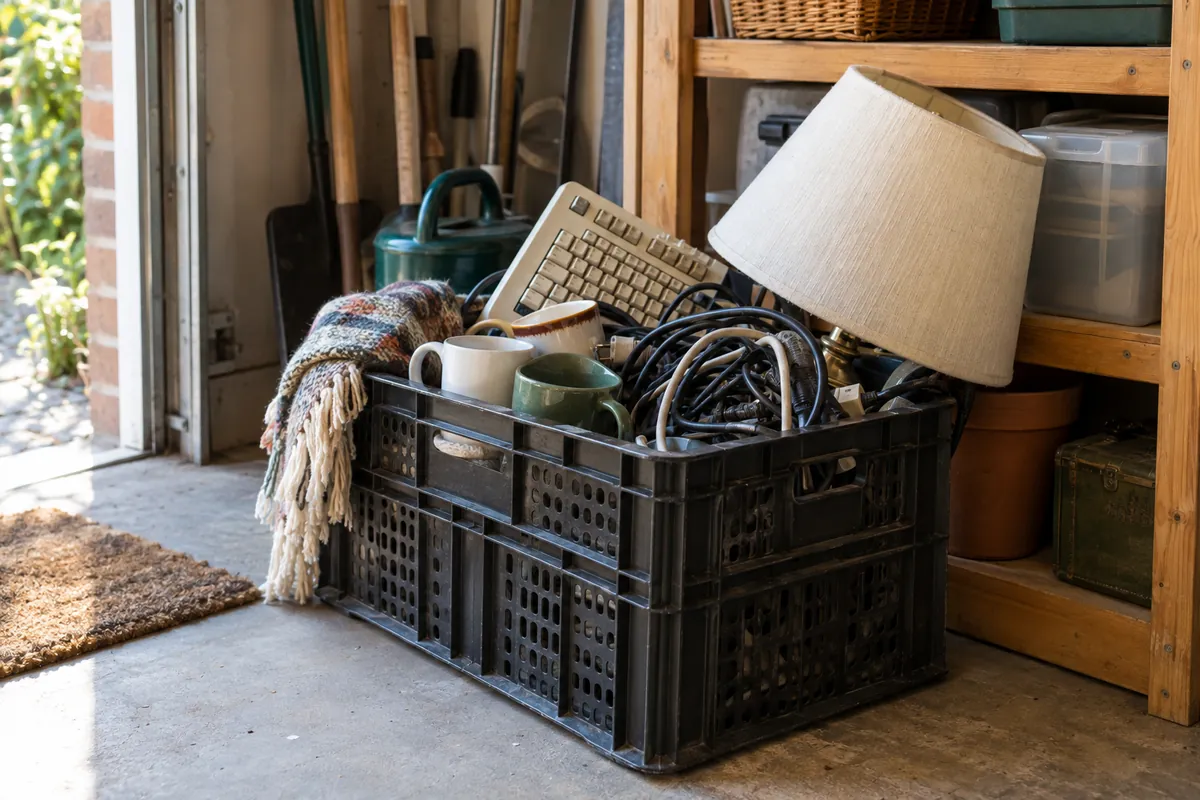
I kept optimizing the fun half (finding) and neglecting the boring half (finishing). A good eye in the aisle pays nothing until the listing is posted. Start with ten things you own if the crate is already talking.
What is the biggest mistake new resellers make?
Why are my items not selling?
Should I disclose small flaws in my listings?
How many listings do I need before reselling works?
What beginner reselling mistakes cost the most?
Disclosure The FlowLister team writes First Thousand Flips. FlowLister is our AI eBay listing tool: from your photos it writes the title, category, item specifics, a price from sold listings and the shipping, and it publishes to eBay through eBay's official Trading API, using eBay's own sign-in. It is AI, so it misses things. We built it, so read this as a disclosure, not a review. Nothing on this site needs it.
Keep reading
When reselling stops being a hobby
The February test, and the records I wish I had started in March.
Where to list your first resale items
One platform, set up properly. A second one after that.