From the garage
How to start reselling in your first month
I used to think starting meant a sourcing run. It meant a blender from the garage and a Saturday I could finish.
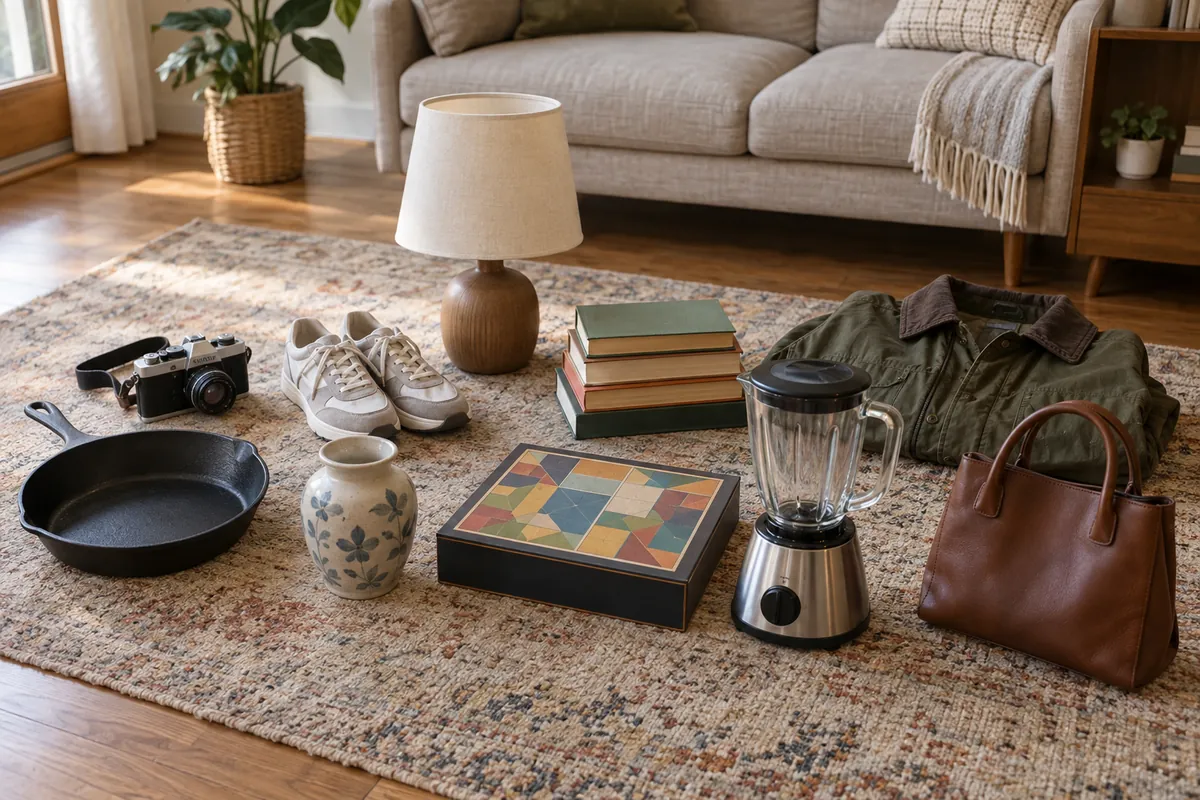
Starting reselling means selling about ten things you already own, on one platform, before you buy any inventory. Photograph them in one sitting, list them in one sitting, ship the first sale the next day, and write down what slowed you down. Buy small only after that, in the categories you already listed.
The advice I got was a shopping list. Goodwill. Estate sales. A niche. A phone full of sold comps. Nobody said the part that stalled me: a crate of 'good' finds on the dining table, still unlisted, three weeks later. I had a system on paper. I had a pile in the room.
Reselling looks like a hunt. The money shows up after the photo, the measurements, the listing, the pack, and the trip to the drop-off. I could find a jacket. I could not finish ten jackets in a row.
So month one is a finishing month, run on stuff you already own. Buying can wait.
What can I sell from my house to start reselling?
Sell ten things you already own, and do not buy anything yet. Walk the garage, the hall closet, the kitchen junk drawer. Pull ten things you would be glad to see leave. An old phone. A coat you have not worn since 2019. A hand mixer with the beaters still in the bag. Kids' shoes in a size you are done with. A hardcover somebody would search by title.
Ten is enough to hit every step once. Mixed on purpose. You want to feel which kinds you can photograph without a fight, and which ones make you invent a reason to check your email.
The point is not the money. Cost basis is zero. The first ten listings teach you the holes: no tape measure, no scale, no boxes, a photo that looks like a hostage picture.
- Pick ten items you already ownGarage, closet, kitchen. Mixed categories. You are shopping your own house so a bad listing costs you an evening, not a tote of inventory you cannot return.
- Set up one selling account and stopOne platform. Finish the profile. Write a return policy you can live with when a pair of pants comes back. Save shipping defaults before the first listing, or you will invent them twelve times.
- Photograph all ten in one sittingSame spot. Same window. Same order of shots. A pale towel on the table is enough. Batching is how ten listings stop feeling like ten separate projects.
- List all ten before you go buy anythingTime the session. Write the number on a sticky note. That is your baseline. Ugly is fine. Posted is the only score that counts.
- Ship the first sale the next dayFast shipping is cheap reputation. The habit is easier at one order a week than at twenty. Keep a roll of poly mailers where you can reach them without standing up.
- Write down what brokeA photo you had to retake. A measurement you guessed. A box you did not own. That list is week two's errand run, not a personality flaw.
Fix the friction. Then buy small.
Fix the three or four things your notes say slowed you down before a sourcing trip. Each one multiplies.
- A photo spot that is already a photo spot. Window, towel, phone. No folding table to assemble.
- A tape measure, a scale that reads to the ounce, and a lint roller in the same drawer.
- Poly mailers and two box sizes you already used.
- A saved listing template with the measurements you always forget.
- A crate or a shelf for anything you buy, so it does not join a pile behind the door.
Then buy. Small. A rule of thumb: thirty to fifty dollars, in categories you already listed from the house. The first buy is a test: does an item you chose behave like an item you happened to own. If you cannot name the evening you will list it, leave it on the rack.
How do I calculate profit on one sale?
Take one sale apart: what the buyer paid, minus platform fees, minus shipping if you covered it, minus the mailer, minus what you paid (zero, if it came from the closet). What is left is the number.
Run three of your own sales through the flip profit calculator. Until you have done that, a buy ceiling is a guess against the sale price, and that is how a rack full of 'deals' can net almost nothing. The sale price itself comes from what the same item sold for on eBay, not from the asking prices.
I used to set a buy ceiling against the sale price. After I ran my own numbers, the ceiling moved down. The rack got quieter.
Write the week down, even if it looks boring
Month one is a shape, not a revenue target. Mine ended up: source Saturday morning, photograph Sunday after coffee, list Monday and Tuesday nights, ship whatever sold the next day. Written on a calendar. Ugly. Repeatable.
Motivation is high in week one and fades after that, which is when the crate fills up. If this sits around a job, the shape matters more.
Leave these for later
Five things can wait: listing on five platforms at once, a lightbox and a 'real' camera, a company on day one, a pallet or clothing bale, and picking a niche.
| Helpful-sounding advice | Why I waited |
|---|---|
| List on five platforms at once | Five inboxes and a chance to sell the same jacket twice. I finished one platform first. |
| Buy a lightbox and a 'real' camera | A window and a phone beat the cheap box I almost bought. Mailers first. |
| Form a company on day one | I sold first. Separate account, every receipt, structure later. |
| Buy a pallet or a clothing bale | Cash and floor space on inventory I could not inspect, before I knew how many listings I could finish in a week. |
| Pick a niche and stay in it | A niche showed up after I saw which items I listed fast and which ones sold. That took a pile of listings, not a mood. |
The rule I write on the crate
Nothing new comes in without a listing night attached. If I cannot name the evening, I have not bought inventory. I have bought a chore. A pile is a reason to quit. A spreadsheet that is a little thin is not.
How much money do I need to start reselling?
What should I sell first as a beginner?
How long does it take to make money reselling?
Should I list on multiple platforms when I start?
How do I start reselling with no experience?
Disclosure The FlowLister team writes First Thousand Flips. FlowLister is our AI eBay listing tool: from your photos it writes the title, category, item specifics, a price from sold listings and the shipping, and it publishes to eBay through eBay's official Trading API, using eBay's own sign-in. It is AI, so it misses things. We built it, so read this as a disclosure, not a review. Nothing on this site needs it.
Keep reading
What you keep on a $40 sale
Fees, postage, the mailer, the $5 tag. Then what is left.
What to sell first when you start reselling
Things you can name from the object. Leave the mystery bag.