The shoebox
When reselling stops being a hobby
Nobody taps you on the shoulder. You notice in February, when you try to say what you made and the shoebox does not know.
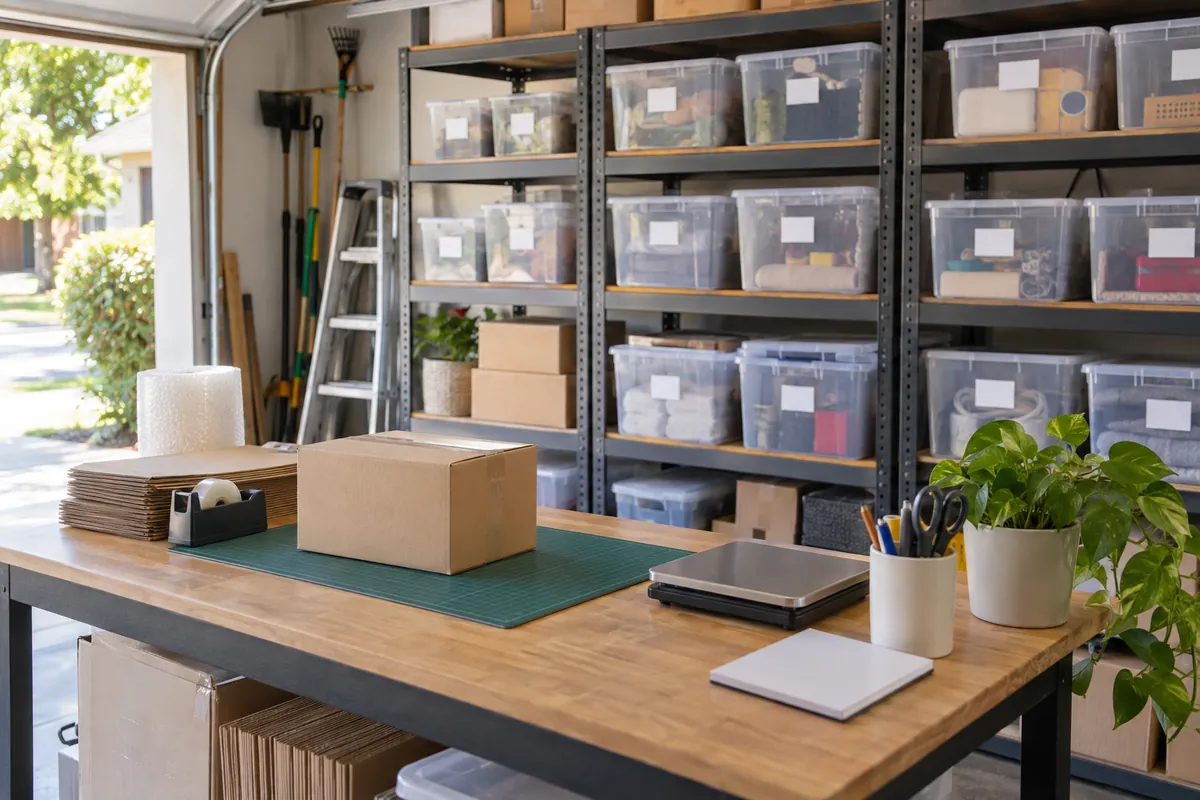
Reselling can cross from hobby to business in silence. A few months of Saturday totes. A shelf that is no longer their own clothes. Then a form, or a tax login, or a partner asking a number. The crossing is cheap if the records exist. Reconstructing a year of garage-sale cash is not.
When does reselling become a business?
A rule of thumb, not a tax test: three or more of the signals below and you are running a small business, whatever you call it in group chats.
- I was buying to resell, not clearing my own closet
- I had a weekly shape, not a burst whenever I felt like it
- I was holding stock: things bought and not yet sold
- I was spending on the activity: mailers, gas, a folding table, a label subscription
- I was choosing items by expected leftover, not by whether they were interesting
What records should resellers keep?
Keep five records from the day you buy: each purchase, each sale, fees and shipping per sale, a mileage log, and receipts for supplies and subscriptions.
| Record | Why February cares |
|---|---|
| Purchase date, source, and price for every item | Cost of goods is subtracted from sales when you work out profit, and bank statements will not reconstruct a $4 estate-sale bowl. |
| Sale date, gross price, and platform | Lets you match platform reports and any forms that show up. |
| Fees and shipping paid, per sale | The difference between the notification and the leftover. |
| Mileage log for sourcing trips | A deduction that needs a log. US rules want records made at or near the time of the trip, not a reconstruction in January. |
| Receipts for supplies and subscriptions | Small each time. Real across a year. Easy if you drop them in a folder the same afternoon. |
A spreadsheet is enough for a first year or two. The format matters less than typing the item the day you buy it, while the receipt is still in the cupholder.
Should I open a separate account for reselling?
Yes, open a dedicated account before you need one: sales in, inventory and supplies out. Three jobs: you can see whether a month worked, tax prep becomes an export, and the inventory budget stops becoming groceries. I ran one account for too long. I do not recommend the archaeology.
What changed when I got serious
Three things changed: I started counting the evening, I started caring about posted volume, and I started asking what happens if I stop.
I started counting the evening
Hobby logic says $12 leftover is $12 I did not have. Business logic asks what else that hour could have produced. That shift changed the cart more than any sourcing tip.
I started caring about posted volume
A great find is a story. Listings that go live are income. Once it is a business, the usual ceiling is how many items you can get up in a week, not how clever Saturday was.
I started asking what happens if I stop
Inventory is money already spent. How fast it turns back into cash, and how much of it never will, is the difference between a business and an expensive collection in totes.
Should I incorporate on day one?
Not on day one: business structure is a real decision, so make it with numbers and advice for your country. What costs almost nothing on day one, and cannot be added later: separate the money, keep the records, log the miles. Those are the pieces I could not reconstruct.
If the question is whether this could replace a paycheck, that is a specific number, not a vibe. The garage-filling mistakes are how people get here with a pile and no books.
When does reselling become a business?
Do I need to register a business to resell?
What records should resellers keep?
Do I have to report reselling income if I do not get a form?
Is reselling a hobby or a business?
Disclosure The FlowLister team writes First Thousand Flips. FlowLister is our AI eBay listing tool: from your photos it writes the title, category, item specifics, a price from sold listings and the shipping, and it publishes to eBay through eBay's official Trading API, using eBay's own sign-in. It is AI, so it misses things. We built it, so read this as a disclosure, not a review. Nothing on this site needs it.
Keep reading
Where to list your first resale items
One platform, set up properly. A second one after that.
eBay vs Facebook Marketplace for your first flips
Decide by the item in your hand, then run one sum: net per hour.